
Welcome to Wildlife Wellbeing Walks monthly updates for March 2026. Spring has definitely started, although the weather has been a bit mixed so far! Read on below for our latest updates: Species of the month is Lesser Celandine Film review on the documentary Six Inches of Soil. Community outreach & social prescribing – what we can offer. Wild Roots Nature Fest – an update on what we are offering this year and how you can …continue reading
Blog
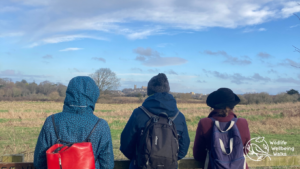
Winter walk – Fairfield Nature Reserve
A different perspective January can be a tough month, and I found the last couple of weeks particularly hard (and with a stinking cold to cap it all off in the final days!). So it was lovely to get out on Saturday 24th with the group on this cold but sunny January morning. The stiff breeze felt like a welcome (if chilly!) way of blowing away some of the cobwebs. We began the walk along …continue reading

New Year’s Day Sunrise Walk
A calm and mindful way to welcome 2026 This is always one of my favourite walks in the calendar: starting off by seeing the sun rise is a beautiful way to greet the year (I’m also not one for fireworks or late nights, so this definitely suits me better). Having checked in with each other first, I invited the group to take notice of all the different scales with a poem I wrote (see Poetry …continue reading
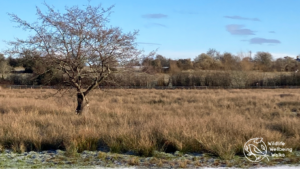
The January Blues – real or imagined?
Is it really a thing? The January blues are, indeed, a real thing with extensive writing and media coverage including a blog post by Circle Psychology Partners and an active discussion on The Jeremy Vine Show on Monday 5th January 2026. Differing slightly from Seasonal Affective Disorder (or SAD) which may be classed as a form of clinical depression, and require treatment, the January blues are shorter in duration and may affect more people. This …continue reading
Everything is Connected
It has been a while since I added a blog post onto the website, mostly because I have been fully focused on Wild Roots Nature Fest, so with the festival getting ever closer, it seemed like a good time to add a new post to explain a bit more about the festival and why it has taken so much of my time! Outreach and community I have been to Escape2Make, Quernmore Primary School, Lancaster 13th …continue reading
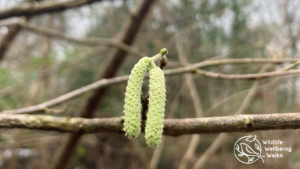
Hazel – December’s species of the month
Hazel – Corylus avellana Think that there is nothing to see in winter out in nature? Think again! The trees around you might appear to be taking a long nap (or even looking a bit dead), but they are just taking a breather, preparing for new life in the Spring. Hazel is a great species to be looking out for at this time of the year, with its yellow-green catkins hanging, waiting to emerge. In …continue reading
Beech – November’s species of the month
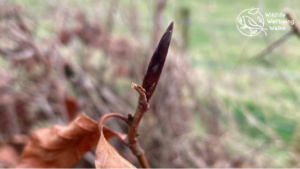
Beech – Fagus sylvatica I love beech trees… I shouldn’t have favourites, but this is definitely in my top 5! From the elegant, sweeping limbs to the perfection of its canopy in spring, summer and autumn. From the beautiful catkins to its knobbly beech mast and long, delicate leaf buds. Not to mention that its trunk looks like an elephant’s foot (and who doesn’t love an elephant) this is a species that has me captivated …continue reading
Robin red-breast – October’s species of the month
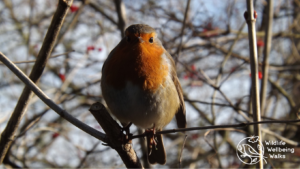
Robin – Erithacus rubecula With migration firmly in my mind for this month, I thought I would share some information about a much-loved and familiar bird species that mostly stays close to home. The robin (aka Robin red-breast) usually doesn’t move more than 5km from its territory at any time of the year, although some females will migrate to warmer areas of southern Europe ahead of the winter. Those which remain during the winter season are …continue reading
Mute swan – September’s species of the month
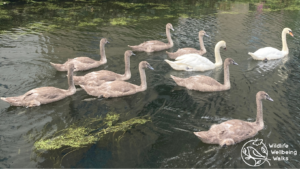
Mute swanCygnus olor Whilst my background is as a botanist, I also love birds and one constant in my time in Lancaster has been the remarkable mute swans that nest on the canal. These birds have consistently reared 6-9 cygnets a year (and as far as I can tell it has been the same pair) for 14 years. As a species which doesn’t start breeding until age 4, an average survival age of 10 years, …continue reading

Nature-based nurturing: A day retreat
A relaxing day of pampering On Thursday 15th February we held our first Day Retreat in conjunction with Amy Gunawan Willow Weaving and Leah Dalby, independent Tropic Ambassador. The theme for the day was the botanicals that featured throughout, we learned information about each species (see below), and used them in our willow-woven heart. The aromatic species (rosemary, lavender and eucalyptus) are all used in the Tropic Skincare products for their naturally beneficial properties (and …continue reading