Welcome to Wildlife Wellbeing Walks monthly updates for March 2026. Spring has definitely started, although the weather has been a bit mixed so far!
Read on below for our latest updates:
- Species of the month is Lesser Celandine
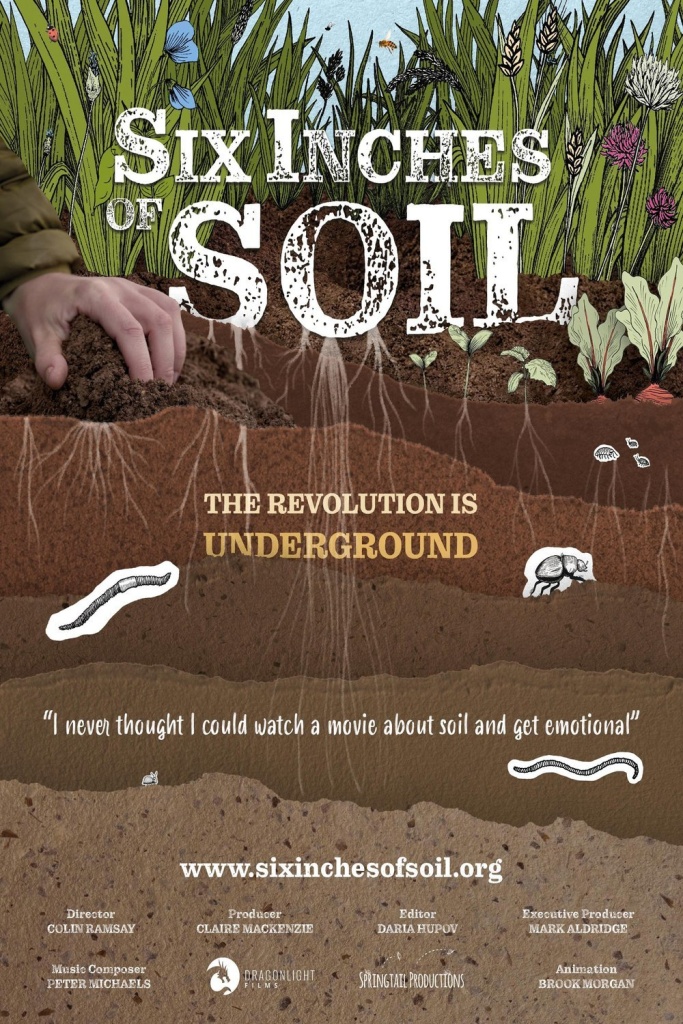
- Film review on the documentary Six Inches of Soil.
- Community outreach & social prescribing – what we can offer.
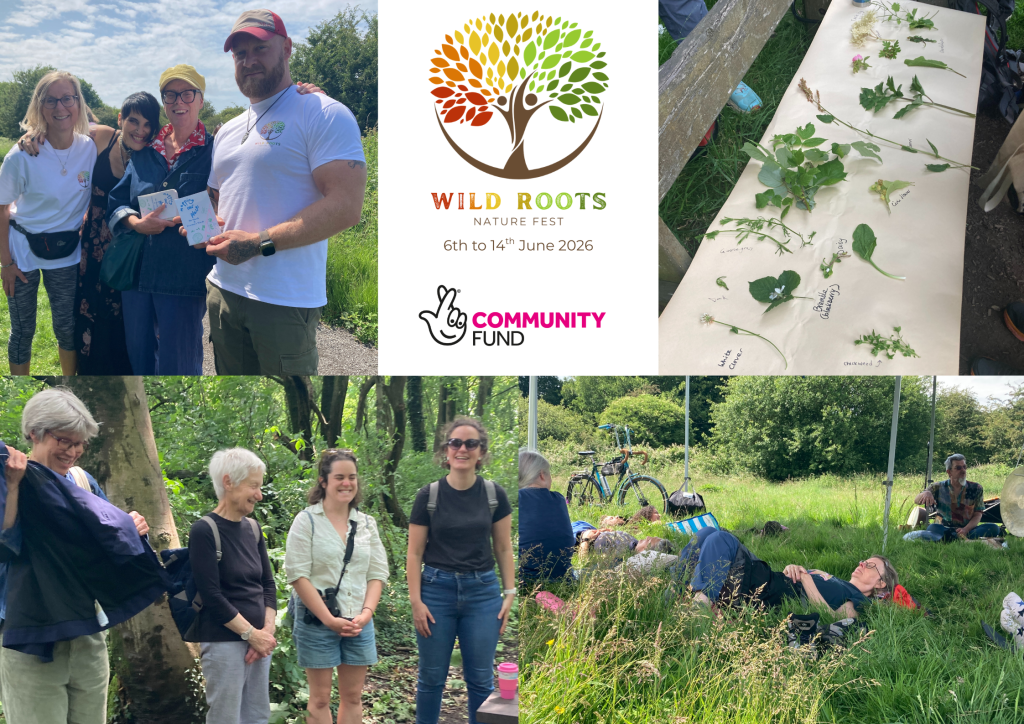
- Wild Roots Nature Fest – an update on what we are offering this year and how you can access all of the content and book your place.
If you aren’t on our mailing list and would like to sign up, we’d love to share with you.
Warmly,
Ros
Species of the month
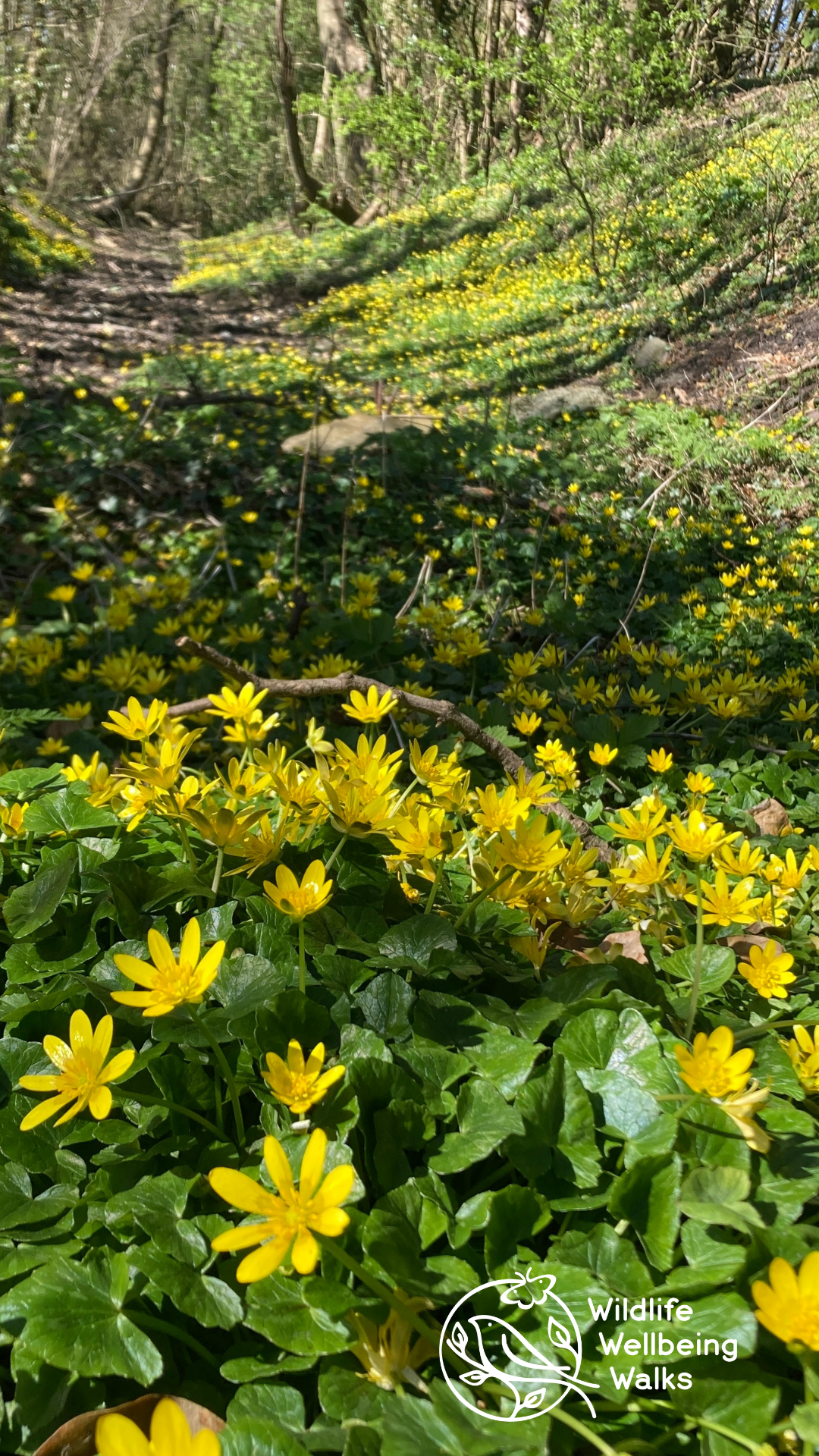
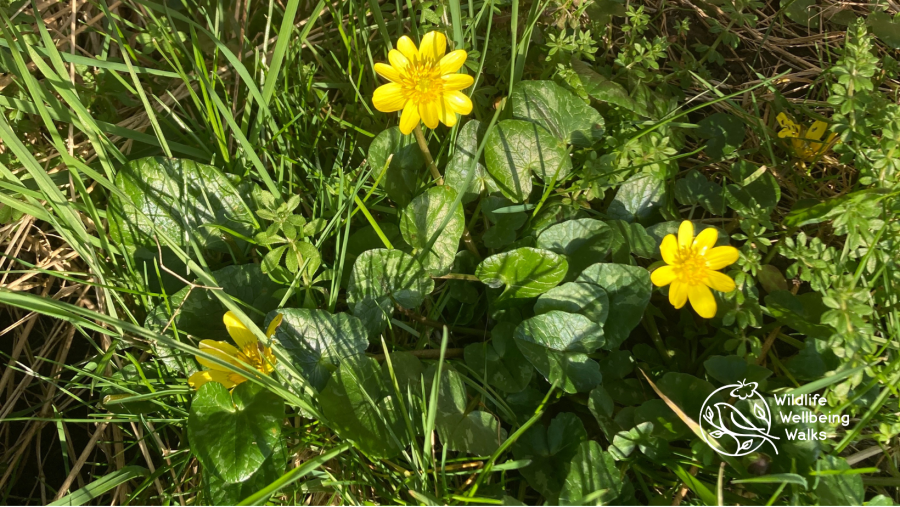
Lesser Celandine (Ficaria verna)
This little yellow-flowered plant is a member of the buttercup family, which you can tell from the shiny petals. Do you remember using buttercup flowers as a child to tell if you liked butter? The answer always seemed to be yes!
Differing from buttercups in having a low, creeping habit, these plants form a carpet of shiny green heart-shaped leaves before turning into a golden river as the flowers come out. The petals are also different, with 8-12 typical on the lesser celandine, compared to around 6 in Creeping (Ranunculus repens) and Meadow (Ranunculus acris) Buttercups.
This is a plant very much associated with woodlands or woodland edges, and in Lancaster there are great swathes of this cheery, early-flowering plant in both Freeman’s Wood and along the cycle path at Quay Meadows. It’s one of the earliest native flowering plants, and its profusion of flowers makes it a popular destination for early-emerging insects. The open, flat platform formed by the petals is perfectly designed for emerging queen bumblebees to land and feast! And, when viewed in UV light, we can see the pattern that bees perceive, showing that they are clearly ‘guided’ to the nectar- and pollen-rich centre of the flowers.
As a sun-loving plant, they are quite a handy predictor of rain – the petals will usually close up to protect them against an oncoming shower (unless they are already pollinated and dying back). Did you know that the leaves also contain high levels of vitamin C and were used to prevent scurvy. They are pretty bitter once the flowers have come out, though! (Note: There are other similar looking plants around at the same time which are either unpalatable or may be toxic, so don’t pick unless you’re with an experienced guide).
Now is the right time of year to be getting out and seeing Lesser Celandines, so I hope you’re able to go and see a bit of sunshine, especially with all the rain we’ve had recently!
Film review: Six Inches of Soil
I was a bit late to the party on this film, which was filmed in 2022 (and released in 2024). Following the regenerative farming journeys of three new farmers in the UK, it explores the importance of healthy soils, and how they can be regenerated to something which sustains agriculture and support the natural environment.
The good bits
It’s an interesting story, following three different growers: one on a mixed arable/livestock farm, another purely livestock and the third renting space for a market garden from a larger arable farm. The health of their soils varies, but it is clear that they are all switched on and keen to be producing in a sensitive and balanced way. Clearly, this is not easy, and shows up with the market gardener struggling to pay herself a wage (and instead relying on part-time work and a supportive family)
But their passion cannot be denied, and they are determined to find a different way than the farming practices which have become more mainstream, dictated by the political system and which subsidies are available. The film gives a good overview of the science behind what they are all doing, whilst keeping it accessible and interesting (in what could, otherwise, be a bit of a dry subject unless you are an enthusiast!). And, finally, the music is gentle and unintrusive (this might not seem important, but I find it can completely detract from a film if it is too loud or dominant, particularly if overly emotional).
The bad bits
I’ve done a bit of research, and unfortunately some of the claims in the film are not accurate, and could be damagingly misleading. An article in The Guardian by George Monbiot packs a punch, demonstrating that the claims of the cattle farm being carbon negative are not true, confirmed by the company that carried out the assessment. It’s a shame that this was not properly captured in the edit, and certainly wasn’t corrected in the version I watched*, even though film-makers said they would consider changing it after general release at cinemas. It’s a pity as this dims the credibility of the film. It’s still an enjoyable watch, but just with a pinch of salt!
*I watched on Amazon Prime for free with my subscription, and it is also available to rent or purchase online directly from the makers.
Community outreach & social prescribing: Our offer
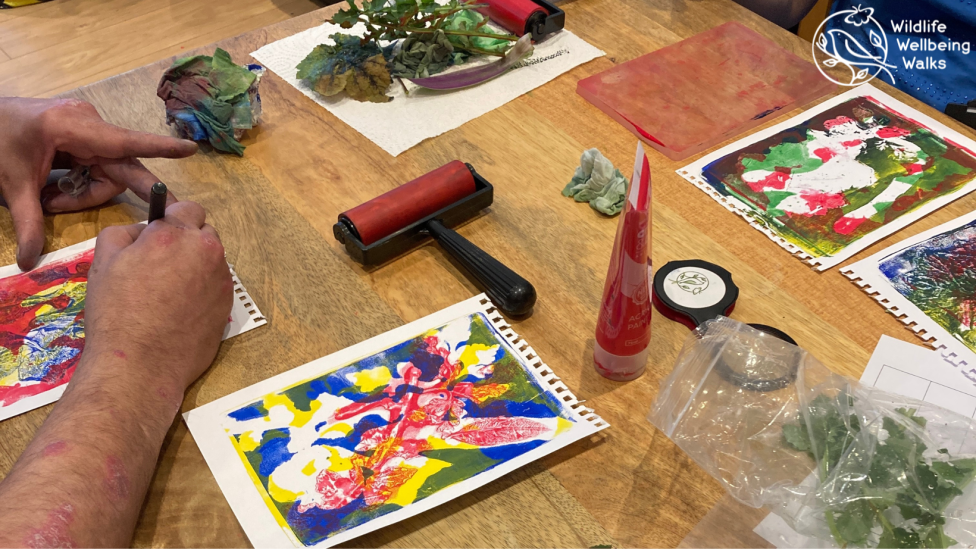
Over the past 12 months, we have had the pleasure of collaborating with various organisations, including Escape2Make and Red Rose Recovery, to deliver nature-connectivity sessions, with a particular emphasis on art. These have provided a creative outlet for participants to express themselves while immersing in the healing power of nature. The feedback has been overwhelmingly positive, and we are grateful for the opportunity to bring a little more green into people’s lives. Over the summer months we plan to expand this to incorporate guided nature walks.
We now also offer nature-based wellbeing support through social prescribing. This initiative aims to provide support for individuals looking to improve their wellbeing by spending time in a natural setting: we believe that nature can be a powerful ally in promoting mental and physical health.
We have a small pot of funding to support both our outreach and social prescribing sessions and we are eager to reach as many people as possible. If you or someone you know could benefit from our nature-based wellbeing support, or would like to collaborate please email us at admin@wildlifewalk.co.uk to find out more.
Wild Roots Nature Fest 2026 - latest news
This year the festival will be running from Saturday 6th to Sunday 14th June with an even wider range of events than last year. We’ve worked hard to include lots of family-friendly sessions, as well as those for adults only so that everyone can get some enjoyment and meaningful, restful time in nature (and lots of fun too!).
We are delighted that National Lottery Awards for All have granted us funding towards the running and delivery of the festival, as well as the outreach activities above. We continue to offer the festival on a donation-only basis to keep it accessible. Any money that you, our participants, contribute will go back into the running of the festival, donations to local/national environmental charities and our community outreach work.
Sessions this year will include:
- Foraging, guided nature walks, guided soundscape walks
- Nature storytelling/folklore, creative writing workshop
- Sound baths, tai chi/chi qong, singing for wellbeing, women’s circle
- Journaling for 16-25s, forest school, nature creativity, face-painting
- Clay at Claver, button-making, seed-bomb making, nature mandalas