
Welcome to Wildlife Wellbeing Walks monthly updates for March 2026. Spring has definitely started, although the weather has been a bit mixed so far! Read on below for our latest updates: Species of the month is Lesser Celandine Film review on the documentary Six Inches of Soil. Community outreach & social prescribing – what we can offer. Wild Roots Nature Fest – an update on what we are offering this year and how you can …continue reading
Category: Uncategorized
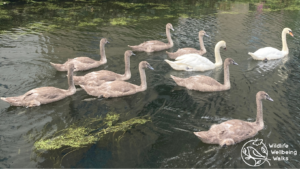
Mute swan – September’s species of the month
Mute swanCygnus olor Whilst my background is as a botanist, I also love birds and one constant in my time in Lancaster has been the remarkable mute swans that nest on the canal. These birds have consistently reared 6-9 cygnets a year (and as far as I can tell it has been the same pair) for 14 years. As a species which doesn’t start breeding until age 4, an average survival age of 10 years, …continue reading
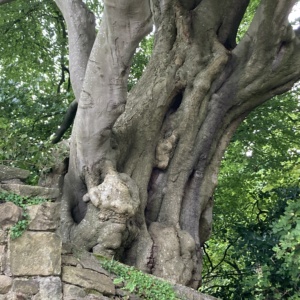
The Wellbeing Hour – September
What is ‘Wellbeing’? For our 3 sessions in September we have explore what wellbeing actually is and what we can do to help improve it. We looked at the 5 Ways to Wellbeing and how these might relate to nature: Connect – both with each other and with nature. Learn – with the natural world there is always something we don’t already know. Every day is a school day! Be Active – taking a walk in …continue reading
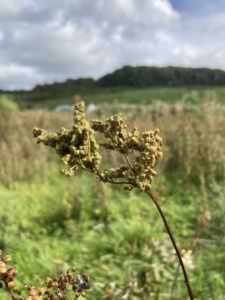
Claver Hill – 10th Anniversary
Sunday 27th August 2023 A community farm (in every sense) When they talk about ‘community’ at Claver Hill, it means everything as well as everyone. What do I mean by this? Well, it was clear from our Wellbeing Walk around the space that it is very much managed with the natural community in mind. All too often, we forget that we are part of nature: no matter how much we silo ourselves in buildings and …continue reading
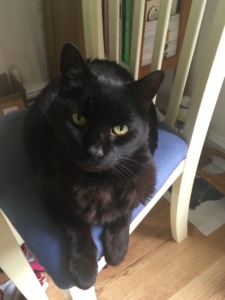
Mindfulness and nature
A personal journey Why do I have a photo of a cat here? Well, this was my lovely old Soots when he was in his prime, but I had to say goodbye to him this weekend. Aside from the obvious heart-wrenching grief of losing a precious member of my family, it has made me realise some things, and I wanted to share this in case it helps or inspires you. Firstly, I am a massive …continue reading
The Storey Gardens
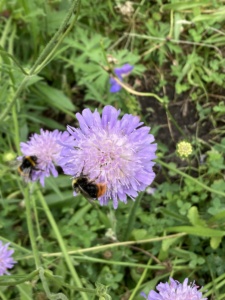
Talk & Walk – Saturday 1st July A hidden gem in the heart of Lancaster The Talk The Talk portion of the day was delivered by Janet, a volunteer who has a wealth of knowledge about The Storey Institute and the Gardens. Janet delivered a fascinating insight into the history of the site (the gardens only exist thanks to World War II evacuees being located in The Storey), and how the Tasting Garden came to …continue reading
The magic of June
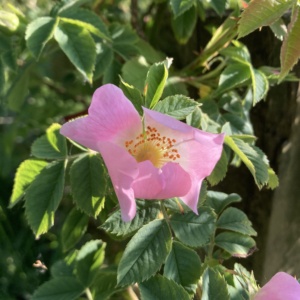
Dog rose (Rosa canina). Image (c) Ros Jones As a June baby, I am perhaps a little biased that this is the best month of the year. This isn’t without merit, however, as I hope you will see from what I have gathered below. This is based on observations and questions from the Summer Nights walk (3) on 1st June around Fairfield Nature Reserve. There was so much to see, a real abundance for the senses, …continue reading
A weekend of wildlife wonders
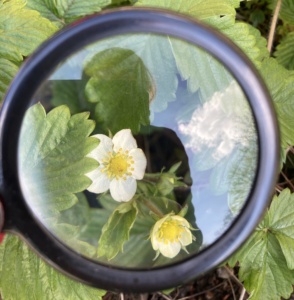
Up close and personal with Visions of Landscapes On Saturday 15th April, artist Anita Burrows part of Higherford Mill Artists and I introduced some immersive walks in the beautiful Storey Gardens. This was in conjunction with the fantastic art exhibition, Visions of Landscapes, being held in The Storey. Half-hour walks were given throughout the day offering people a chance to see the garden in a whole new way: up close and personal. We used hand-held lenses …continue reading
Talk-walk: Spring birdsong
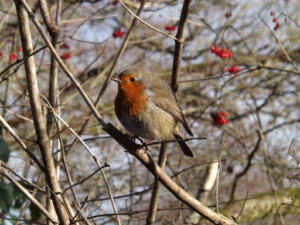
The aim of this session was to introduce and learn some different bird songs, of both resident and summer migratory species. This can be quite tricky to do in practice, attempting to distinguish one ‘voice’ amongst the many. Even more so as some of the songs are complex and varied. To make it easier, we started the talk part of the session listening to some recorded bird songs. I used an app for this, but …continue reading
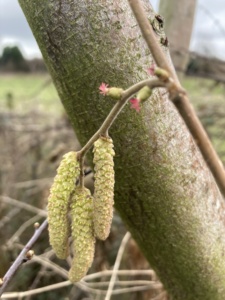
Winter Tree Identification – A Beginner’s Guide
Saturday 4th February 2023 How to ID trees in winter This may sound obvious, but for me the starting point is always observation: Once you have an idea of some of these features, you can then start to identify your species. If you already have some knowledge, this observation alone might be enough for you to make an identification. For example, most people know that silver birch has shiny white bark with darker fissures. But …continue reading