Welcome to Wildlife Wellbeing Walks monthly updates for May 2026. There is so much life going on all around us that it’s a little hard to keep up with it all. A dear (and wise) friend reminded me the other day that whilst the spring energy is whooshing through us, it can all too easily lead to us overdoing things and there is a danger that we’ll wear ourselves out, so I’m making sure to include plenty of rest and restorative elements into the coming month (not least because it’s going to be very busy for Wild Roots in June). I hope you are able to do the same!
Read on below for our latest updates:
- Wild Roots Nature Fest – an update on what we are offering this year and how you can access all of the content and book your place.
- Species of the month is Bluebell
- Community outreach & social prescribing – read on about the three sessions delivered in April.
If you aren’t on our mailing list and would like to sign up, we’d love to share with you.
Warmly,
Ros
Wild Roots Nature Fest 2026 - full programme out now!
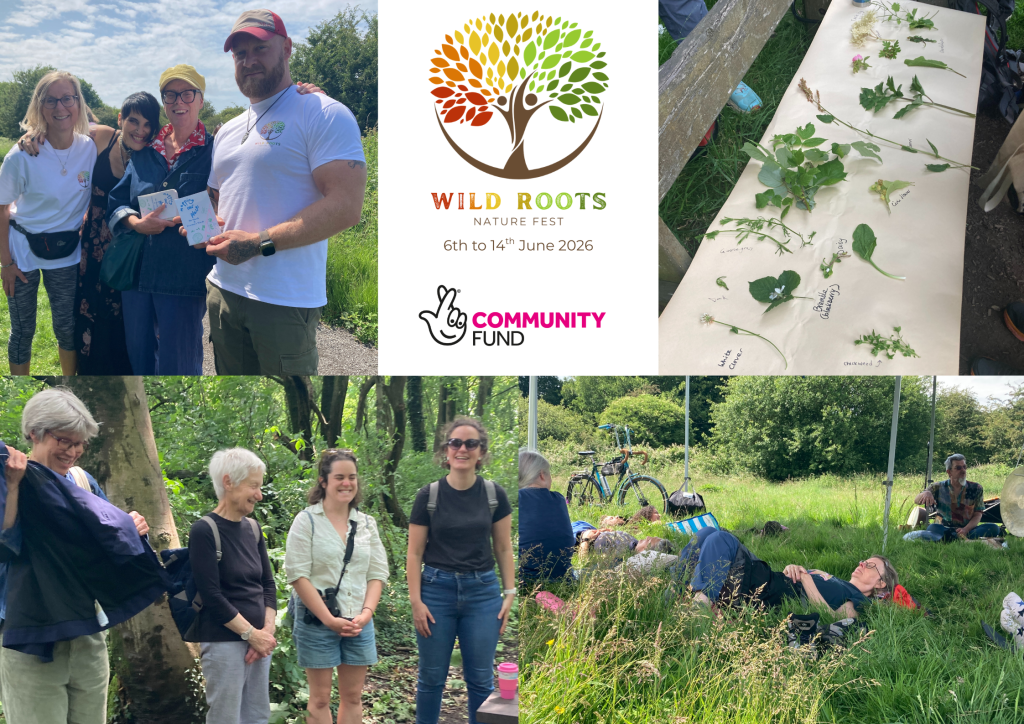
We’ve been working hard behind the scenes to get everything ready for this year’s festival, which officially starts on Saturday 6th June with events at The Storey Gardens… but we have a little Secret Cinema pre-festival session at The Gregson on Friday 5th June. We’ll be showing 3 short films, each with a set of discussion points, to really get the festival in swing.
This year’s festival has 30 bookable and 10 drop-in events for you to take part in. We have a mixture of events for adults, families and children, so there should be something for everyone. Many of the events are accessible for wheelchairs (and push-chairs). Check out the programme here on our website. We hope to see you there!
Species of the month
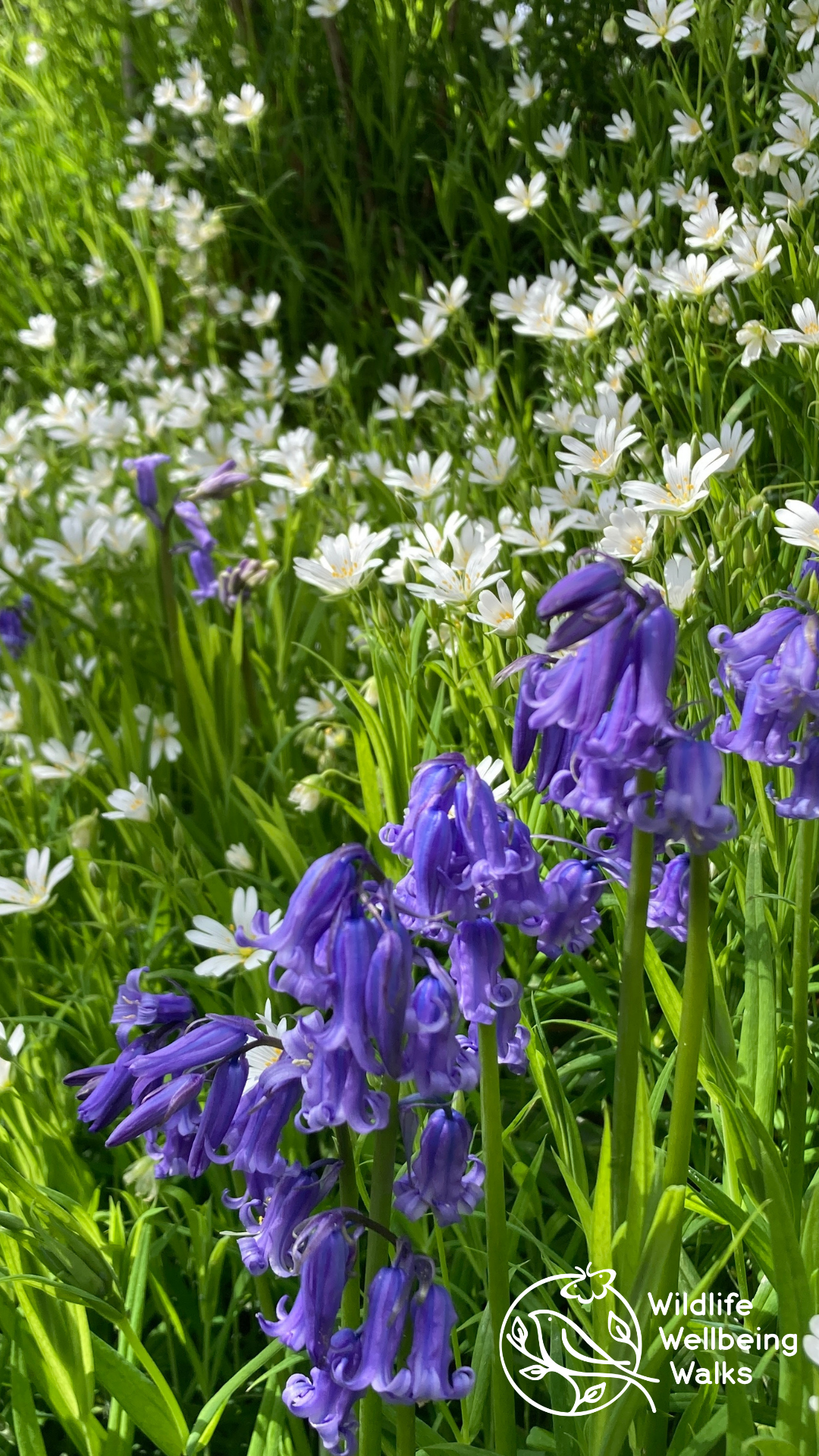
Bluebell (Hyacinthoides non-scripta)
We all know this plant – a spring favourite dotted through the woods and alongside hedgerows. It can seems like a river cutting a swathe through a dappled understorey on a sunny spring day. Add in the heady scent and the hum of bees and it becomes a full sensory experience.
This bluebell isn’t the only species, and sadly the introduction of the ‘Spanish’ species (Hyacinthoides hispanica, mostly as a garden escape) has caused a decline. The two hybridise easily and this reduces the prevalence of our native species and in turn impacts our wildlife. The hybrids and non-native species both being less attractive to our pollinators: it seems that the quality of the pollen and nectar is just not as good.
Next time you are out on a walk, see if you can spot the difference between the two species, and can you spot the hybrids as well?
- Native bluebell has dark-blue flowers, clustered on one side of the stem, hanging over. They are more delicated, strongly scented and the pollen-bearing stamens are a creamy white.
- The Spanish and hybrid bluebells are much more vigorous, upright and with flowers around the whole of the stem. You will often see white and pink flowers as well, and stamens are either blue or green.
Why does it matter? The UK has up to 50% of the world’s population and, as it begins to hybridise this is being watered down. It’s internationally significant. What can you do? If you do have any Spanish bluebells in your garden (and want to remove them), please make sure you do so properly. There is some great advice on a blog by Burgon and Ball (and more information about the two species).
Walk Report - April Dusk Chorus
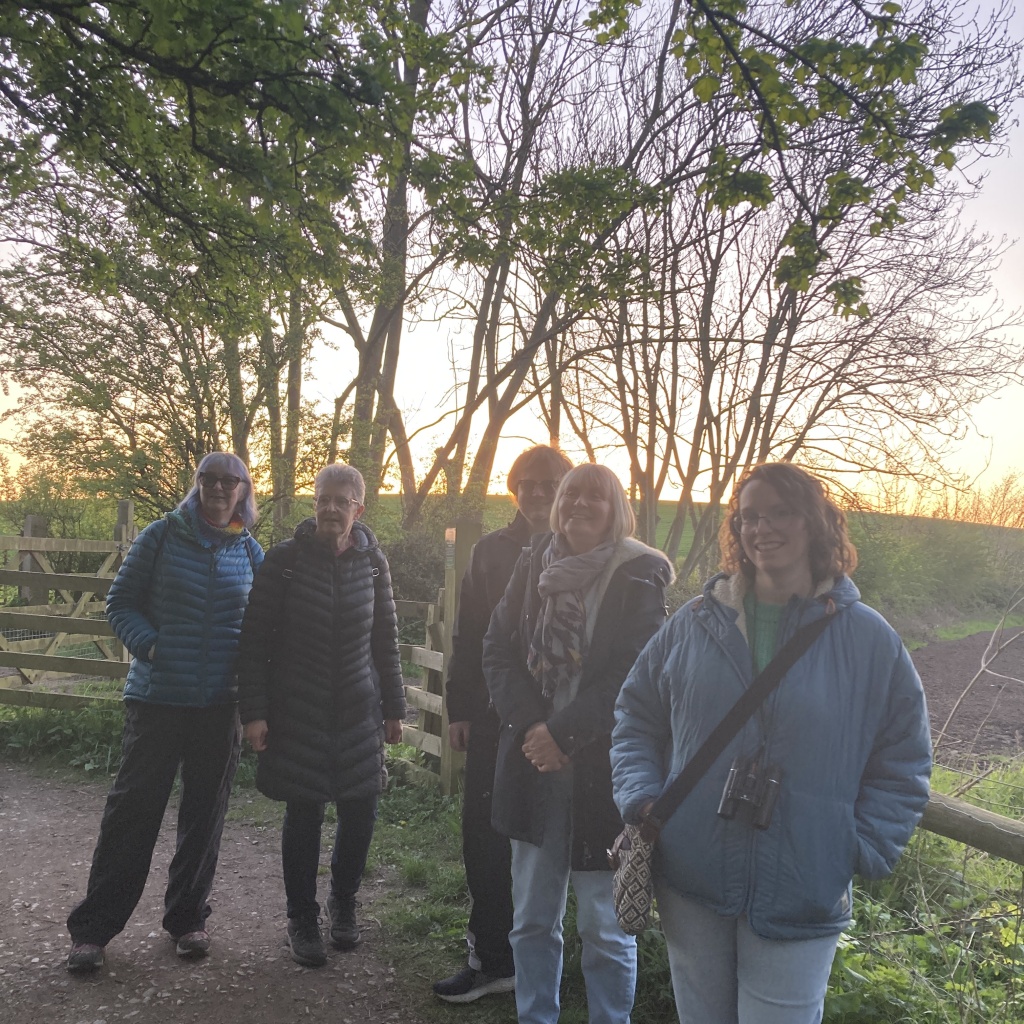
On the evening of Sunday 19th April we enjoyed a gentle and mindful walk around Fairfield Nature Reserve, exploring the Orchard, spring flowers and, most of all, connecting with the wildlife around us. At this time of year, the birdsong is electric in the mornings, but much slower and soothing of an evening. Coupled with the gentle, golden light as the sun sets, this was a beautiful way to engage with each other and the world around us.
Highlights included the discovery of some white forget-me-notes (further research being unable to definitively answer ‘why’), getting our heads around pink hawthorn petals (another unknown) and seeing 2 roe deer (that’s two walks in a roe for seeing these deer!).
We also saw and heard swallows flying above (and more than one, so I guess we can declare spring, at least, is in full swing!). The sunset was a particular highlight for me, seeing the trees bathed in golden light and, despite the chill of the evening air, filling me up with a warm glow inside.
Community outreach & social prescribing: April sessions
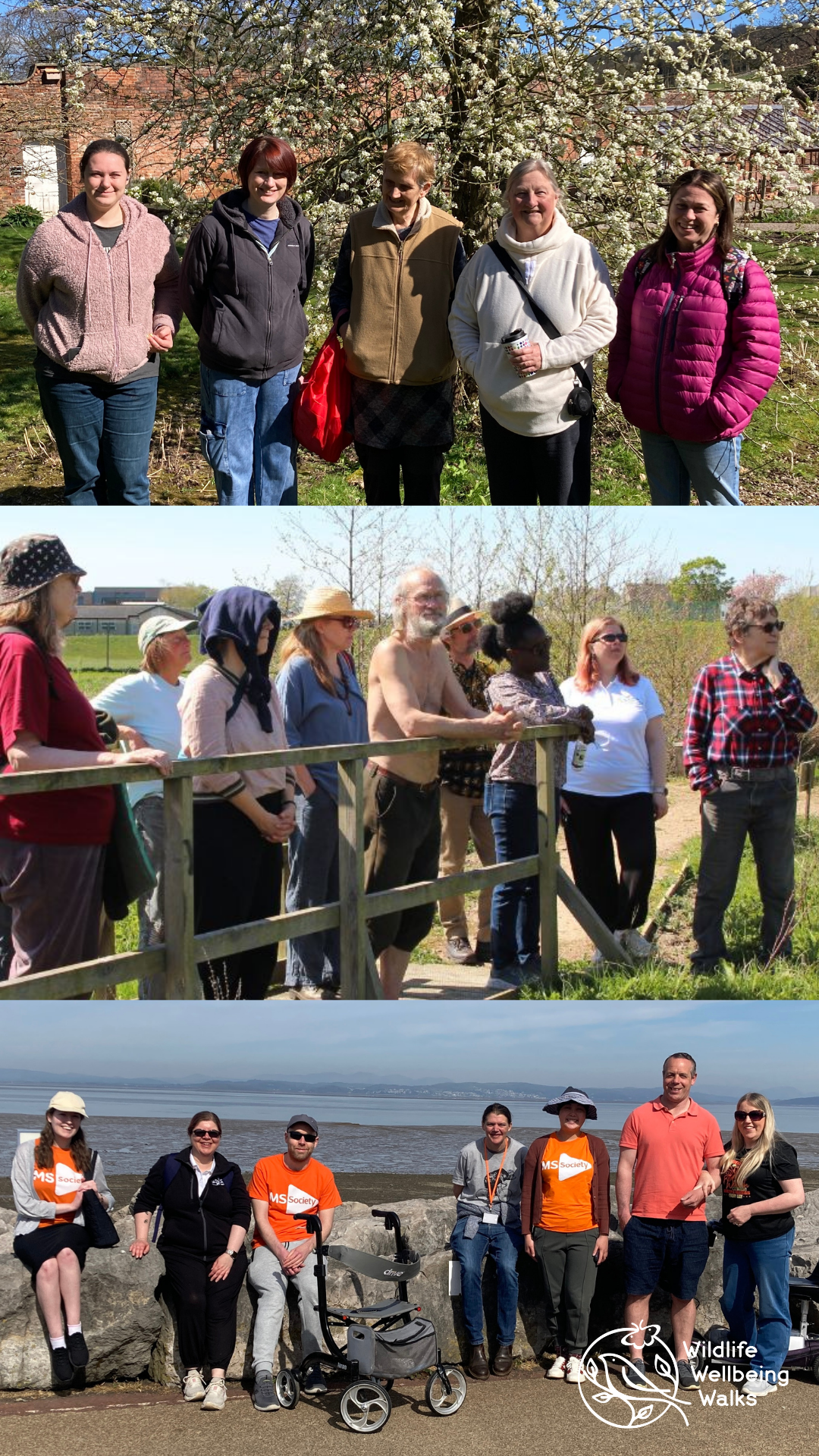
April has been a busy month, as spring has sprung into action, so has Ros, with 3 very different community sessions.
- At the very start of April, we were at Larksfoot Forest School at Leighton Hall with a session for parents. We spent a mindful couple of hours connecting, immersing ourselves in nature and taking time to slow down and give our minds a break from the busyness and everyday stresses and strains of life. Starting the session with a little bit of barefoot grounding really set the tone, and we were all feeling more calm, relaxed and connected by the end. Highlights included beautiful spring birdsong and the beautiful flowering pear (shown behind us in the top image).
- As part of FoodFutures Spring into Action, we Shared The Harvest for the first time this year at Claver Hill Community Project, with a joint tour by Ros and Moyna. It was fantastic to learn from Moyna about all of the fruit trees and shrubs planted on site – from unusual apple varieties to gooseberries (a personal favourite!). Claver Hill has been designed to work in harmony with nature, so it was wonderful to see butterflies, St Mark’s flies, bees and alder beetles in abundance. After the walk we enjoyed a picnic which included salad leaves harvested from the polytunnels at Claver.
- Having met volunteers from the MS Society last July at the Bay Health Festivals in Dalton Square, we’ve been planning for months to provide a walk in Morecambe. On the last Saturday in April we met at Happy Mount Park and enjoyed a gentle amble along the prom and back. Slowing down to a comfortable pace for all, we really noticed small details that even I would normally miss (and I am infamous for one session that was about 250m in 2.5 hours!). Seeing ladybirds emerging onto the rocks, noticing the colours of the bay, and the fantastic questions asked by such an engaged group was joyous!